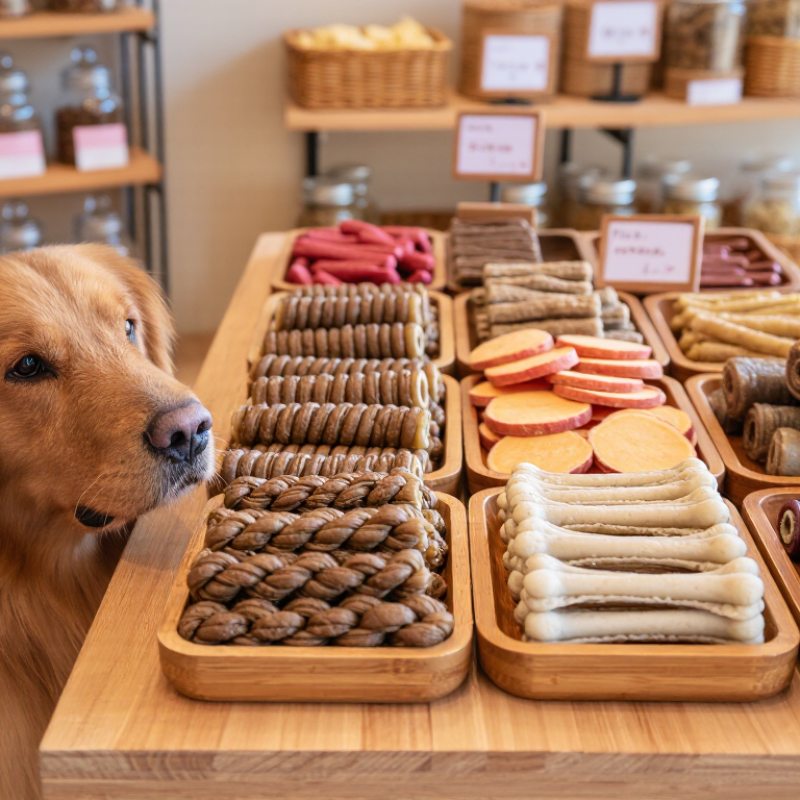
Why Choose Natural Dog Chews for Your Business?

Natural Dog Chews can give a pet business a practical way to meet demand for simple, recognizable products. Buyers often look closely at ingredient lists, sourcing details, and chew texture before making a choice. A dried chew displayed beside clear product information feels more trustworthy than a vague “all-natural” promise. The phrase alone is not proof of quality.

Veterinary nutritionist Dr. Lisa M. Freeman has emphasized the importance of evaluating pet food claims through evidence rather than marketing language. A useful takeaway for chew retailers is: “Look beyond the label and assess the product’s ingredients, purpose, and safety.” This wording summarizes that principle; it is not presented as a verbatim quotation. Businesses can apply it by asking suppliers how ingredients are sourced, how products are processed, and what supervision they recommend. Those answers matter. So does honest labeling.

Natural chews may support product variety and encourage repeat visits, but they are not a perfect fit for every dog. Size, chewing style, and dental condition can affect suitability. A small, hard chew may be a poor choice for a dog that gulps treats. Staff guidance should be clear, cautious, and easy to understand. Retailers should also review supplier documentation and keep product descriptions specific. That takes time. It can still build trust. And if a product’s origin or composition is unclear, choosing not to stock it may be the wiser business decision.

Why Choose Natural Dog Chews for Your Business?

What Are Natural Dog Chews and How Are They Made?

Natural dog chews are edible products made mainly from identifiable animal or plant ingredients, with limited processing. Common examples include dried skin, tendons, tracheas, collagen-rich tissues, and vegetable-based alternatives. A typical process involves sourcing, trimming, washing, heat treatment, drying, and sealed packaging. Air-drying removes moisture slowly, while controlled heating can reduce microbial risks. The exact process matters.

The word “natural” can mislead. The Association of American Feed Control Officials describes natural feed ingredients as coming from plant, animal, or mineral sources, with limited chemically synthetic processing. Vitamins and minerals may still be permitted under that definition. Therefore, buyers should review ingredient lists, country of origin, batch details, and testing records. Natural is not a safety guarantee.

Market demand is substantial. The American Pet Products Association estimated 65.1 million U.S. households owned a dog in 2023–2024. Its 2024 State of the Industry report also valued U.S. pet industry spending at $147 billion in 2023. These figures show commercial potential, but quality controls remain essential. Suppliers should monitor moisture activity, foreign materials, Salmonella risk, and storage conditions. Clear traceability helps retailers respond quickly if a lot fails inspection. Small details matter.

I would question any chew that promises too much. A stronger product story combines simple ingredients, documented processing, and realistic feeding guidance. Some chews can splinter, cause choking, or upset digestion. Staff training should reflect those limits. Consumers deserve useful facts, not polished assumptions.


Which Health Benefits Do Natural Dog Chews Provide?

Why Choose Natural Dog Chews for Your Business?

Natural dog chews can support daily enrichment, dental care, and calmer behavior. The American Pet Products Association’s 2023–2024 National Pet Owners Survey shows that treats remain a regular part of dog ownership. Chewing gives dogs a constructive activity, especially during quiet periods at home. A firm chew may create mild mechanical friction against plaque. However, it cannot replace brushing or veterinary dental examinations. The Veterinary Oral Health Council emphasizes consistent home care for plaque control, not occasional chewing alone.

The benefits depend on the ingredient, texture, size, and the individual dog. Single-ingredient animal chews may provide protein, but they can also add significant calories. Overly hard items may risk tooth fractures. Small pieces can become choking hazards. Natural does not automatically mean safer. The U.S. Food and Drug Administration has repeatedly advised owners to supervise dogs with chew products and discard damaged pieces. This matters for retailers. Clear feeding guidance, weight recommendations, and storage instructions demonstrate professional responsibility. A chew should feel appropriate in the hand, not merely look rustic on a shelf. Some dogs benefit from longer chewing time, while others need softer options or should avoid certain ingredients. Evidence is still uneven across natural chew categories, so businesses should avoid promising cleaner teeth, better digestion, or reduced anxiety without veterinary support.

Why Choose Natural Dog Chews for Your Business?

Which health benefits can natural dog chews provide?

Natural dog chews may support dental care through chewing action, provide mental enrichment, satisfy normal chewing behavior, and contribute nutrients depending on the ingredient. Benefits vary by chew type, size, hardness, and the individual dog. Chews should be selected appropriately and used under supervision; they are not a substitute for regular veterinary dental care.

How Do Natural Chews Support Dogs’ Instinctive Needs?

Dogs are wired to investigate, grip, and chew. A natural chew can give those instincts a purposeful outlet, rather than leaving a dog to test chair legs or slippers. The act of chewing also provides sensory feedback: texture, resistance, and scent change as the dog works. For many dogs, that quiet effort seems to help occupy restless moments. It is not a cure for anxiety or a substitute for exercise, though. Each dog responds differently.

For a business, explaining this distinction builds trust. Describe a chew’s source, texture, and intended size clearly, so caregivers can make an informed choice. A small, brittle piece may not suit a powerful chewer; a very hard chew may also risk tooth damage. There is no perfect option for every mouth.

Caregivers should supervise chewing, remove pieces that become small enough to swallow, and offer fresh water nearby. Dogs may chew quickly, slowly, or hardly at all. That variation is worth acknowledging, even when it complicates a product description.

If a dog has dental problems, dietary restrictions, or a history of swallowing objects, caregivers should ask a veterinarian before introducing a new chew. Teeth matter. So does the individual dog.

What Should Businesses Consider When Choosing Dog Chews?

Choosing natural dog chews can strengthen a business’s product range, but appearance alone is not enough. Buyers should examine ingredient origin, processing methods, and supplier consistency. A chew made from limited, recognizable ingredients may be easier for customers to understand. It may also suit dogs with sensitive diets. Still, “natural” does not automatically mean safe or suitable for every dog.

Size, texture, and hardness deserve careful attention. A small chew may create a choking risk for a large dog, while a very hard product may damage teeth. Businesses should request safety records, batch information, storage guidance, and clear feeding instructions. Practical testing matters too. A chew can look premium in a package but crumble during shipping. That mistake can affect reviews and returns. I would test samples in real handling conditions before placing a large order.

Tips: Compare several batches, not one sample. Check odor, texture, and breakage. Ask how suppliers control contamination and allergens. Keep product claims specific and supported by evidence. Avoid promising dental, medical, or nutritional results without reliable documentation. Staff should explain supervision clearly, especially for aggressive chewers and puppies. Honest labeling builds trust, although it may make the product sound less exciting. That is usually better than creating expectations the chew cannot meet.

How Can Natural Dog Chews Add Value to a Pet Product Line?

Why Choose Natural Dog Chews for Your Business?

Natural dog chews can add practical value to a pet product line when quality is consistent and clearly explained. Pet owners often look for simple ingredients, recognizable textures, and products that fit daily routines. A chew made from limited ingredients may complement food, toys, and dental-care products. It can also encourage repeat purchases when dogs accept the taste and texture.

In practice, product value depends on more than the word “natural.” Suppliers should provide ingredient details, batch records, storage guidance, and appropriate safety testing. Chews should be inspected for unusual odor, cracks, moisture, and inconsistent sizing. These details support retailer confidence and help staff answer customer questions accurately. Natural does not automatically mean safer. That assumption needs challenging. A clear feeding guide and supervision advice remain important, especially for aggressive chewers or smaller dogs. Packaging can show texture, intended dog size, and serving frequency without making exaggerated health claims.

Tips: Offer several textures and sizes, but keep the range manageable. Review customer feedback every few months. Note which chews arrive damaged or remain unsold. Use those findings to adjust purchasing decisions. A small sample-testing program can reveal problems before a full launch. Do not ignore shelf life. Humidity, heat, and poor sealing may affect quality. Pet retailers should also train staff to describe benefits carefully, since personal experience is useful but not a substitute for reliable product information.

Why Choose Natural Dog Chews for Your Business? — How Can Natural Dog Chews Add Value to a Pet Product Line?

Product Dimension What Buyers Can Evaluate Potential Value for a Product Line Useful Business Measure
Ingredient transparency Review the ingredient list, animal source, processing details, and any added ingredients. “Natural” can have different meanings depending on the product and applicable regulations, so it should not replace a clear ingredient declaration. Clear, specific product information can help retailers explain what a chew contains and help shoppers compare products. Number of declared ingredients; percentage of products with source and processing information available.
Chew format and texture Compare shape, dimensions, density, and texture across options. Chewing time varies with the individual dog, the product, and how it is used. A range of formats can give stores options for different shopping preferences without promising a fixed chew duration. Formats offered; product dimensions; customer feedback by format.
Calories and feeding guidance Check whether calorie information and clear feeding directions are available. Treats and chews contribute to a dog’s overall daily calorie intake. Practical feeding information supports informed purchasing and makes the product easier to merchandise responsibly. Products with calorie information; completeness of feeding and storage directions.
Safety and supervision Review warnings and instructions, including guidance to supervise dogs while chewing and to choose an appropriate size and product for the dog. Consistent, easy-to-find directions can support responsible use and more confident staff recommendations. Presence of supervision, size-selection, and discard instructions on packaging.
Quality control and traceability Ask suppliers how incoming materials, processing, finished products, and production lots are identified and documented. Documented controls and lot identification can help a business investigate quality questions and manage product records. Availability of lot codes, supplier documentation, and written quality-control procedures.
Storage and shelf-life information Check that packaging states appropriate storage conditions and provides a clear date or shelf-life basis where applicable. Usable storage guidance helps retailers handle stock and gives customers practical instructions after purchase. Storage instructions present; date and lot-code legibility; stock rotation records.
Range planning Compare product sizes, pack counts, price points, and intended use while avoiding unsupported claims about health benefits. A thoughtfully tiered assortment can serve different purchase needs and create opportunities to test demand by format. Sales by SKU; repeat-purchase rate; returns or complaints by product format.
Natural dog chews vary by ingredient, processing, size, and texture. Product claims and labeling should be checked against the requirements that apply in the market where the product is sold.